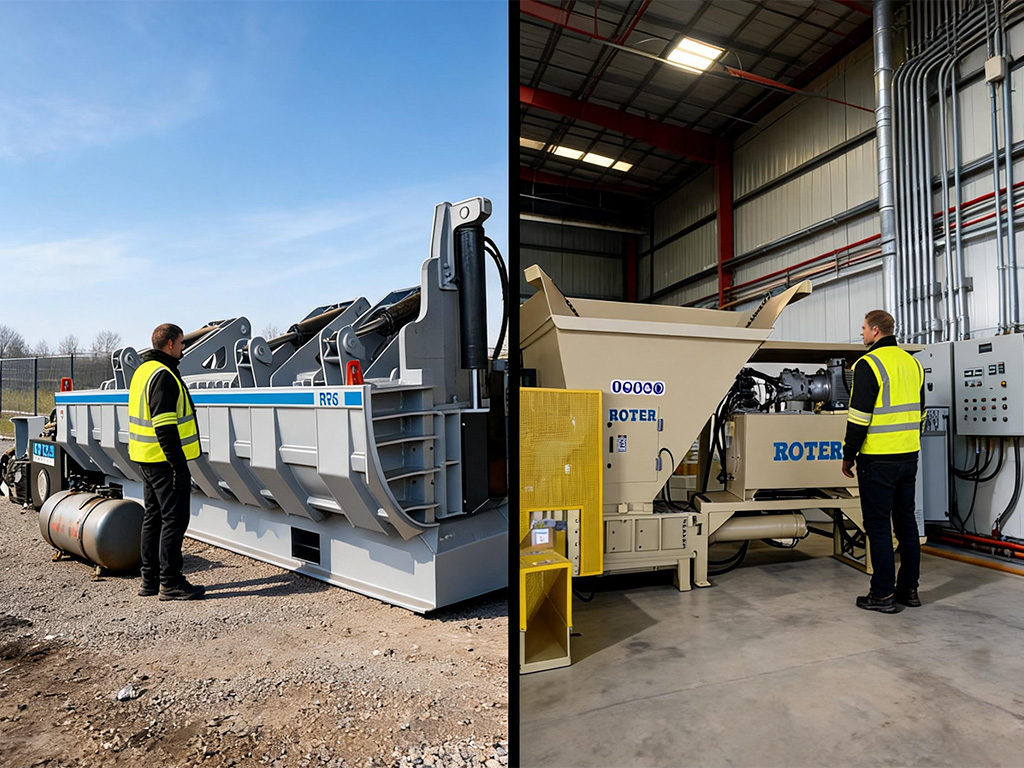
Choosing between diesel and electric power for a baler is a site-infrastructure decision dressed up as a technical spec choice. Both power a machine’s hydraulic system to identical compression or shear performance — Roter machines run diesel as standard, with electric motors available on demand — so the question is not which drives harder, but which fits the grid, site layout, and duty pattern the yard actually has.
What diesel power actually solves
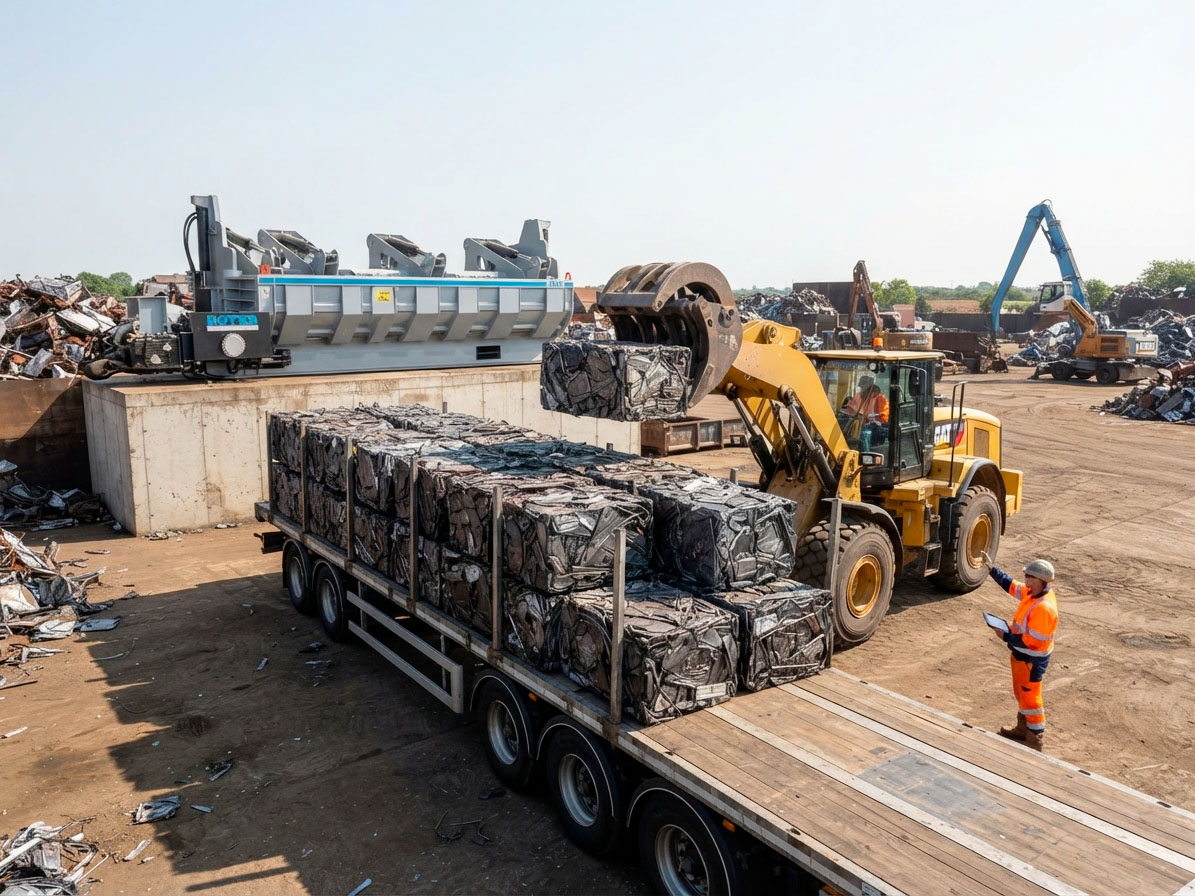
A diesel-powered baler is independent of grid connection entirely, which matters most for semi-mobile, roll-on/off, and trailer-mounted configurations that may operate at sites with limited or no reliable electrical infrastructure — demolition sites, remote yards, or locations awaiting a permanent grid connection. It also means the machine’s operating capability is not constrained by the site’s existing electrical capacity, which can otherwise become an unexpected limiting factor discovered only after a machine has been ordered.
Diesel power removes grid dependency from the equation entirely — a real advantage anywhere the electrical infrastructure is uncertain, temporary, or simply not yet built.
The trade-off is fuel cost and on-site fuel logistics — storage, delivery, and consumption tracking become part of the operation, along with the emissions profile that comes with any diesel-powered heavy equipment.
What electric power actually solves
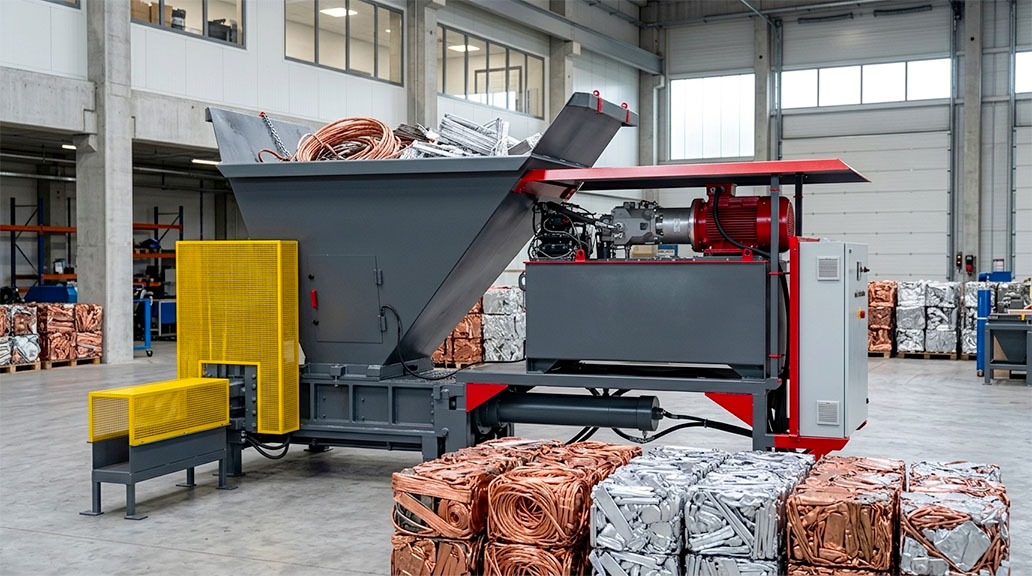
For fixed installations with a strong, reliable grid connection already in place, electric power can offer lower running costs per cycle and a simpler day-to-day operating profile, without fuel storage, delivery scheduling, or diesel-specific maintenance items such as fuel filtration and engine servicing. For yards prioritising a lower on-site emissions profile — whether for internal sustainability goals or site-specific environmental permitting — electric removes combustion emissions from the baler itself entirely.
The trade-off runs the other way from diesel: electric configuration depends on the site’s electrical capacity being sufficient and reliable, and any future site move or expansion needs to account for that same grid dependency at the new location.
Matching power source to configuration and site reality
- Fixed installation with strong grid connection: electric power is usually the stronger fit, given lower running cost per cycle and no fuel logistics — see our comparison of fixed vs semi-mobile installation for the configuration side of this decision
- Semi-mobile, roll-on/off, or trailer-mounted: diesel is usually the more practical default, since these configurations exist precisely to operate independently of a fixed site — see our guide to deployable baler configurations
- Uncertain or developing site infrastructure: diesel removes the risk of the machine being constrained by electrical capacity that has not yet been confirmed or built out
- Strong internal sustainability targets with confirmed grid capacity: electric supports a lower operational emissions profile without sacrificing compression or shear performance
The right power source follows the configuration and the site, not personal preference for one technology over another. A diesel decision made for a fixed installation with excellent grid access is usually solving a problem that doesn’t exist.
Questions worth confirming before choosing
- What is the site’s confirmed available electrical capacity, and is it sufficient for continuous heavy-duty operation, not just peak demonstration load?
- Is the site’s grid connection permanent, or could the operation relocate within the machine’s working life?
- What are the realistic fuel logistics and storage requirements if diesel is chosen — delivery frequency, on-site storage, consumption tracking?
- Does the yard have specific environmental permitting or internal targets that favour electric operation?
- Does the chosen power source match the deployment configuration — a diesel unit makes more sense for a machine that may move than an electric one tied to fixed infrastructure
Weighing diesel against electric for your specific site? Describe your grid access and configuration needs to Roter’s technical team — start with the full range here — and get a power-source recommendation built around your actual infrastructure.
FAQs
Does diesel or electric power give a baler more compression or shear force?
Neither — power source drives the hydraulic system to identical performance. Roter machines run diesel as standard with electric motors available on demand, and the choice affects running cost, emissions, and site dependency rather than raw machine capability.
Which power source suits a semi-mobile or trailer-mounted baler?
Diesel is usually the more practical default for semi-mobile, roll-on/off, or trailer-mounted configurations, since these exist to operate independently of a fixed site and diesel removes grid dependency entirely.
Is electric power cheaper to run than diesel?
For a fixed installation with a strong, reliable grid connection, electric power can offer lower running cost per cycle and removes fuel storage and delivery logistics — but this depends on the site having sufficient confirmed electrical capacity.
What happens if I choose electric but my site’s grid capacity is insufficient?
The machine’s operating capability could be constrained by available power, which is why confirmed electrical capacity for continuous heavy-duty operation — not just peak demonstration load — should be verified before committing to electric.
Should power source match my baler’s deployment configuration?
Yes. Diesel fits configurations that may move or operate at sites with uncertain infrastructure. Electric fits fixed installations with confirmed, reliable grid access. Mismatching the two usually solves a problem that doesn’t exist for that configuration.