End-of-life agricultural machinery — tractors, combines, balers, sprayers, and other farm equipment — shares the core processing challenge of automotive scrap: heavy-gauge steel, hollow structural sections, and components engineered to withstand years of hard field use, all of which resist casual size reduction. For agricultural recyclers and dealers handling trade-in and decommissioned equipment, matching baler capability to that specific material profile determines whether the operation processes machinery efficiently or slowly, expensively grinds through it.
What makes farm equipment scrap different from general mixed steel
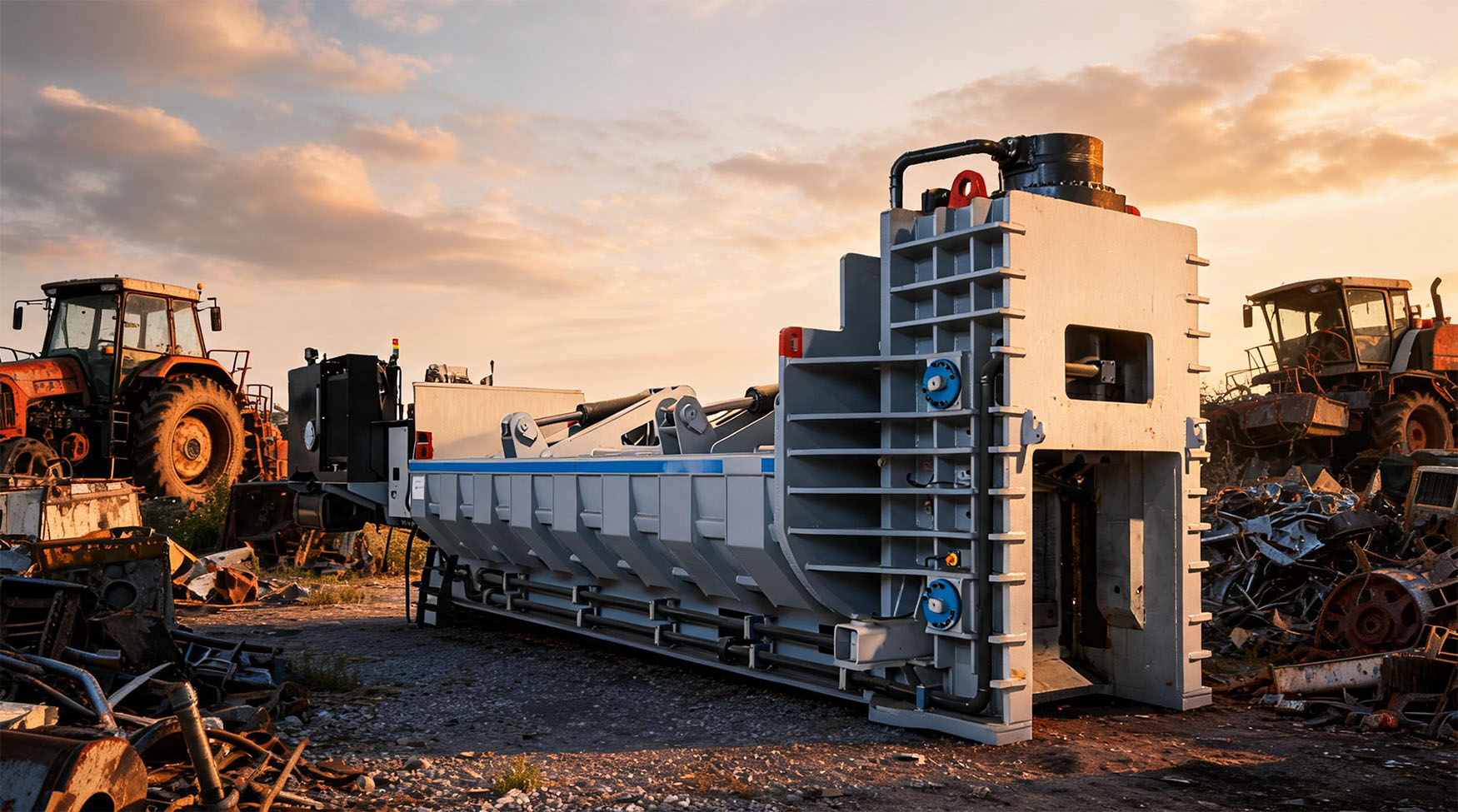
A tractor chassis or combine frame is built from heavier-gauge structural steel than most general scrap streams, engineered for decades of load-bearing use in demanding field conditions. Attachments, linkages, and hydraulic components add complexity beyond a simple metal shell — closer in profile to industrial demolition steel than to lighter mixed scrap, but often larger and more awkwardly shaped than either. Processing this material efficiently generally requires cutting capability alongside compression, not compaction alone, since much of what arrives is simply too large and too resistant to reduce any other way.
Farm equipment scrap sits closer to heavy industrial demolition steel than to a car body — larger, heavier-gauge, and built for a working life that measures in decades rather than years.
What needs to happen before machinery reaches the baler
Hydraulic fluids, fuel, batteries, tyres, and any residual oils need draining and removing before a machine’s steel structure is processed — the same depollution discipline that applies to end-of-life vehicles, and for broadly the same reasons: contamination affects bale quality and downstream acceptance, and fluids present both an environmental and fire risk if processed alongside the metal fraction. Attachments and implements often need separating from the base machine as well, since a fully assembled unit may exceed practical chamber dimensions even where a shear baler’s cutting capability could otherwise handle the material.
Matching machine capability to the material
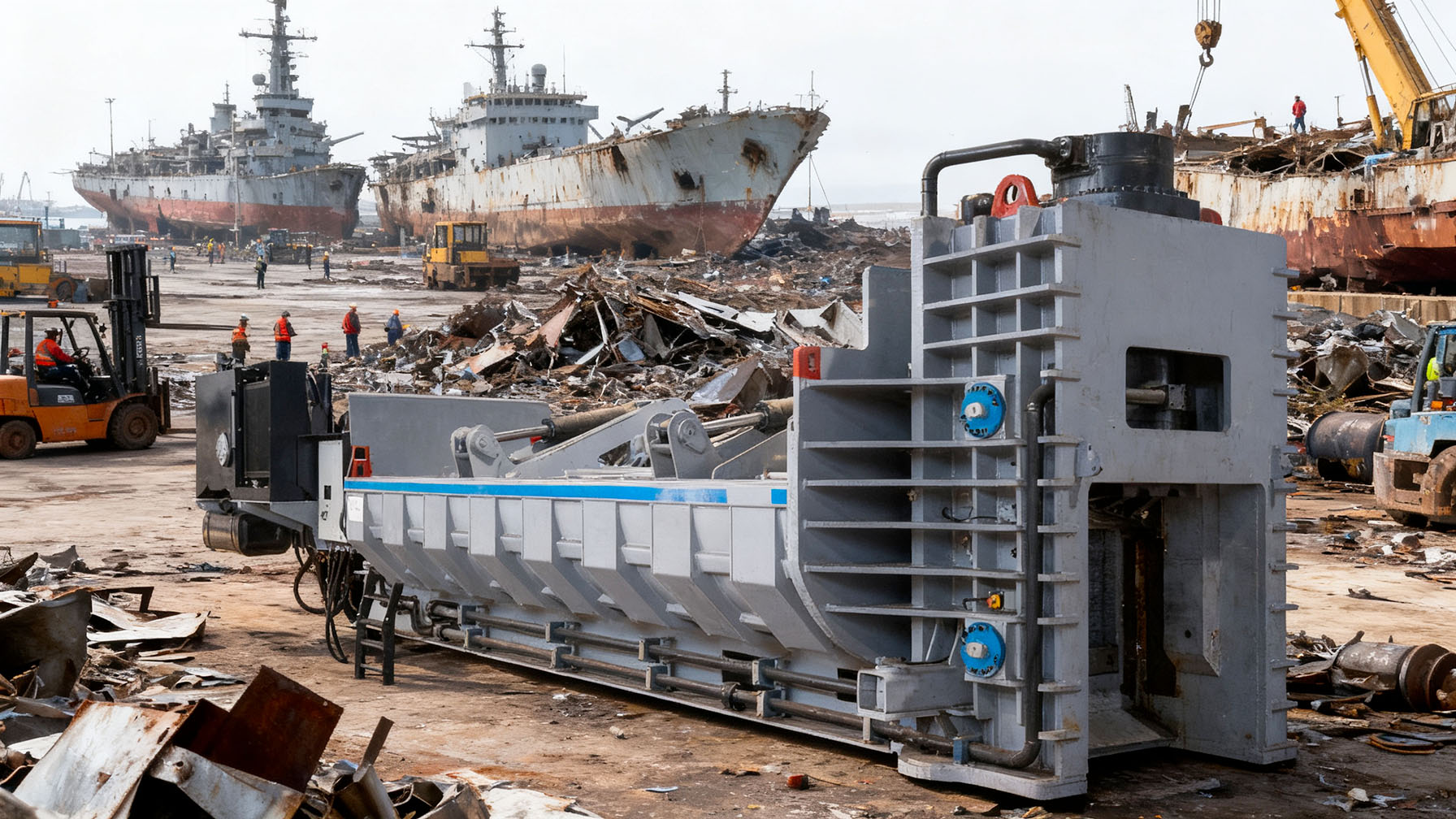
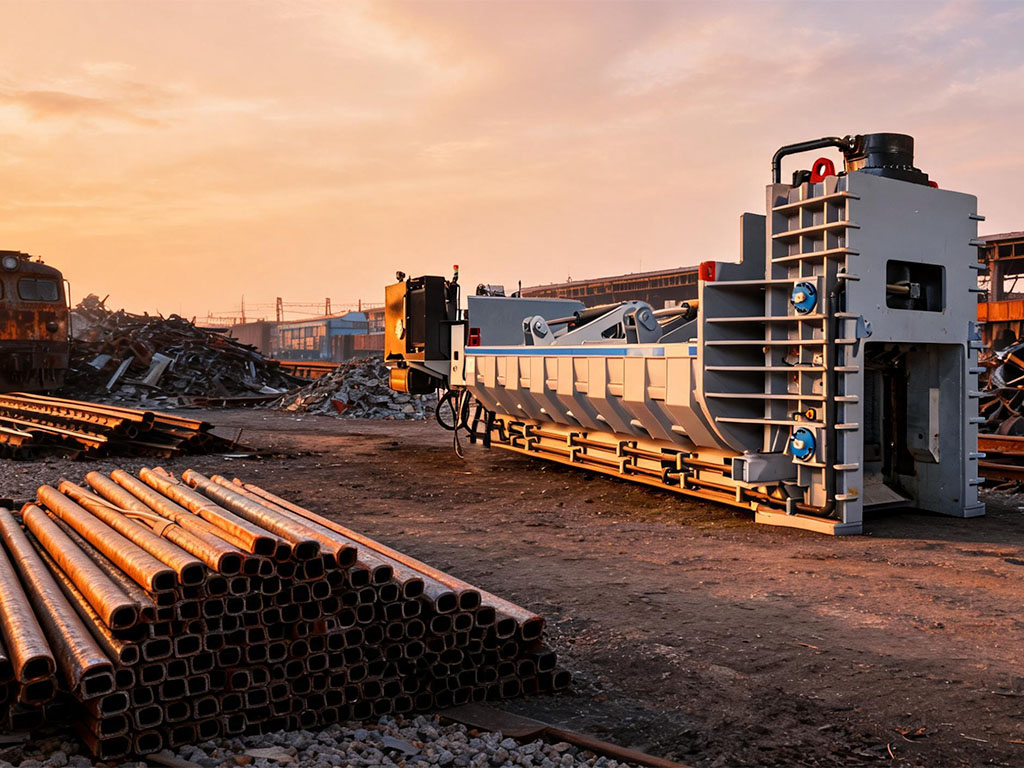
Roter’s shear balers — delivering 550 tonnes of cutting force on the RR550.5 and RR550.6, and 715 tonnes on the RR715.6 — are built for exactly this category of heavy-gauge, resistant structural steel, cutting oversized sections down before compaction in the same pass. For agricultural recyclers processing a genuine mix of equipment sizes, from smaller implements to full tractor chassis, our decision matrix by material stream covers how to weigh shear capability against straightforward compaction depending on what dominates the actual intake.
- Confirm shear force is sized to the heaviest structural sections regularly received, not an average implement
- Plan for depollution — fluids, batteries, tyres — as a resourced step ahead of the baler, not an afterthought
- Account for genuinely variable equipment size in chamber capacity and cycle planning, since a farm equipment stream is rarely uniform
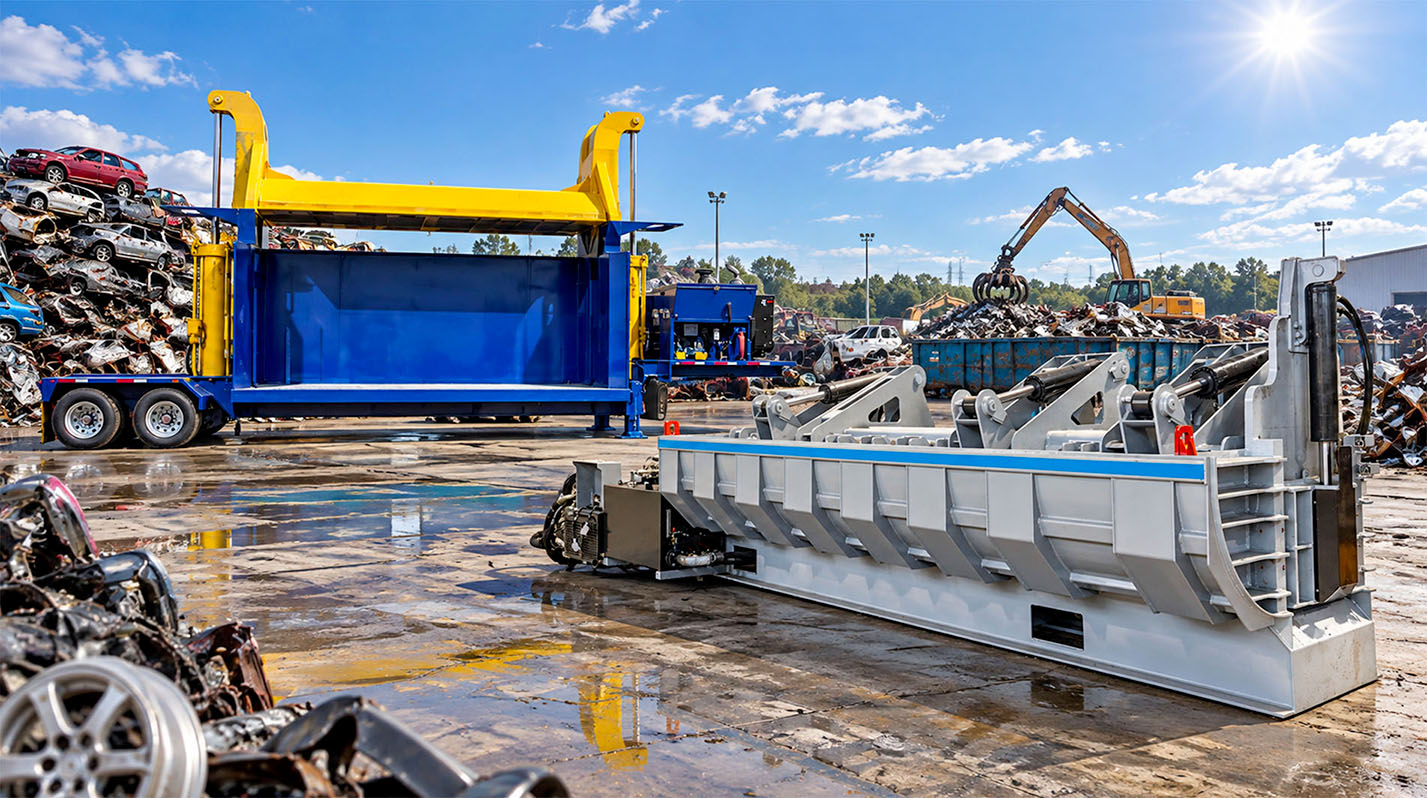
- Consider semi-mobile or trailer-mounted configuration where the operation serves dispersed rural collection points rather than a single fixed yard
Where deployment configuration matters more than usual
Agricultural recyclers often serve genuinely dispersed rural areas, collecting decommissioned equipment from multiple farms or dealerships rather than receiving material at a single central point. Our comparison of roll-on/off vs trailer-mounted configurations is particularly relevant here — a trailer-mounted shear baler that can travel to a collection point, rather than requiring every piece of equipment to be hauled to a fixed yard, changes the logistics economics for this specific vertical more than for most others.
For an agricultural recycler covering a wide rural territory, the machine’s ability to travel to the equipment is often as valuable as its ability to cut it.
A practical framework for agricultural equipment recycling
- Map the realistic range of equipment sizes and structural gauge the operation actually receives
- Resource depollution — fluids, batteries, tyres — as a distinct, compliant step before baling
- Size shear force to the heaviest common structural section, not an average unit
- Weigh deployment configuration against how dispersed the collection territory actually is
Processing end-of-life agricultural machinery and want a configuration recommendation? Describe your equipment range and collection pattern to Roter’s technical team — start with the full range here.
FAQs
Why is farm equipment scrap harder to process than general mixed steel?
Tractors, combines, and similar machinery are built from heavier-gauge structural steel than general scrap streams, engineered for decades of field use, and often include complex attachments and hydraulic components that resist simple compaction.
Do I need a shear baler for agricultural equipment recycling?
Usually yes for larger structural sections — the heavy-gauge, resistant steel in tractor chassis and similar equipment generally requires cutting capability alongside compression, closer to industrial demolition steel processing than light mixed scrap.
What needs to happen before farm machinery reaches the baler?
Hydraulic fluids, fuel, batteries, tyres, and residual oils need draining and removing, and attachments often need separating from the base unit, before the steel structure is processed for compaction.
Why does deployment configuration matter more for agricultural recyclers?
Agricultural recyclers often serve dispersed rural territories, collecting from multiple farms or dealerships. A trailer-mounted or semi-mobile machine that can travel to the equipment changes the logistics economics more significantly than for a yard receiving material at one fixed point.
How should I size shear force for a mixed agricultural equipment stream?
Size to the heaviest structural sections regularly received, such as full tractor or combine chassis, rather than an average implement, since undersizing for the toughest common material creates a processing bottleneck.