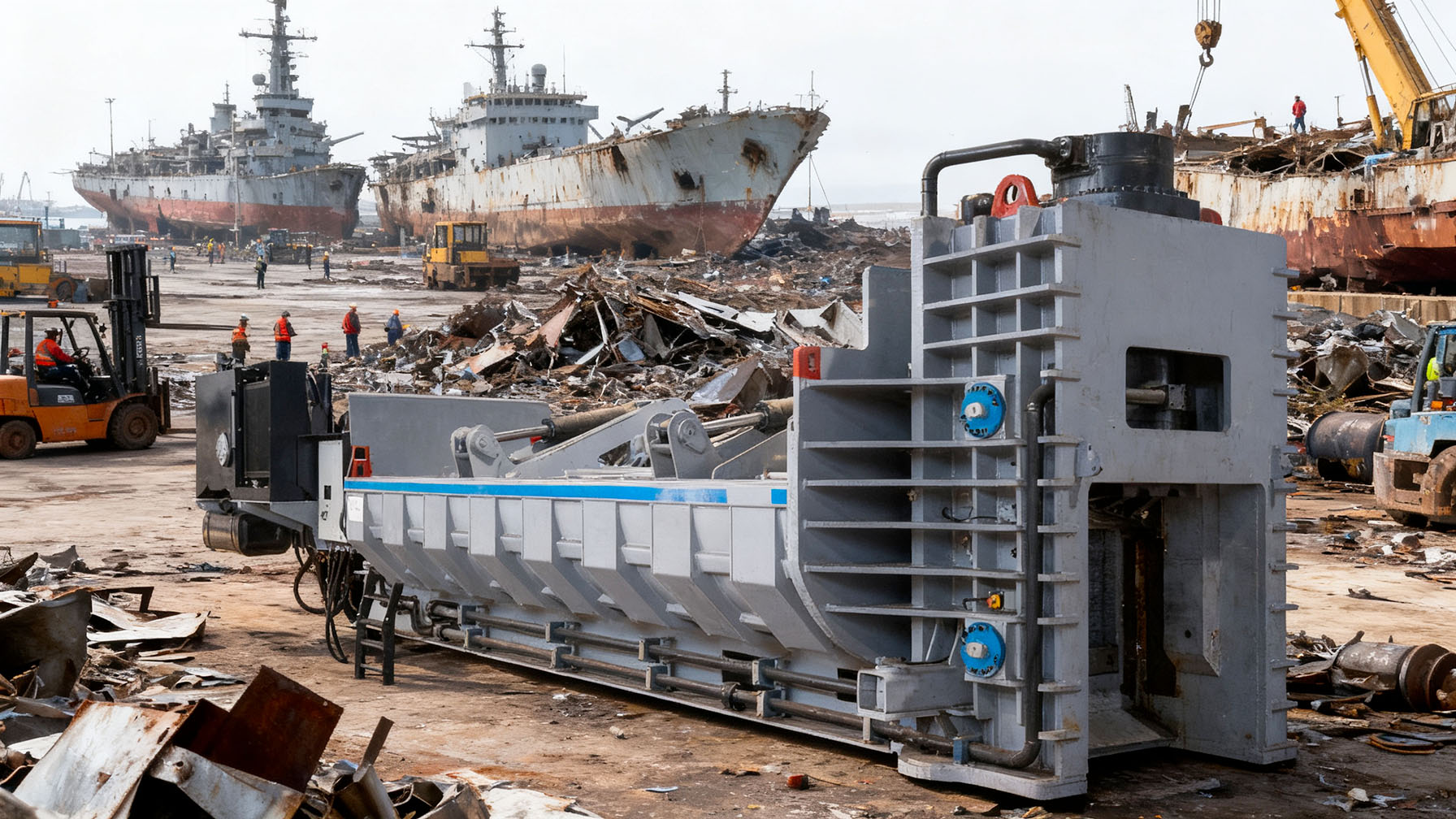
Ship and marine scrap recycling presents one of the most demanding material profiles a baler will ever face: heavy steel plate, structural sections, and hull fragments cut down during dismantling, often coated, contaminated, or corroded after years in a marine environment. For dismantling yards, matching equipment to that reality — not a generic heavy-steel assumption — determines whether the operation processes material efficiently or fights the machine at every cycle.
Why ship-derived scrap is a distinct processing category
Vessel hulls, decks, and structural framing are built from thick steel plate designed to withstand decades at sea, cut into manageable sections during dismantling before ever reaching a baler. That pre-cut material still arrives dense, heavy-gauge, and often irregular in shape — closer to industrial demolition steel than to lighter mixed scrap, but frequently coated in marine paint, contaminated with residual oils, or corroded in ways that affect both handling and downstream acceptance.
Marine scrap has already survived one demanding environment before it ever reaches the yard — the material that results is dense, resistant, and rarely clean.
What needs to happen before hull sections reach compaction equipment
Ship dismantling is itself a heavily regulated activity, and hazardous materials removal — asbestos, residual fuels and oils, and other contaminants specific to vessel construction — is a specialist upstream process that must be completed to the relevant regulatory standard before the steel fraction is processed for compaction at all. Once that depollution stage is properly resourced and compliant, the baler’s role begins at the point where clean, cut steel sections need further reduction and compaction to reach mill-ready or transport-ready form.
Matching shear and compression capability to the material
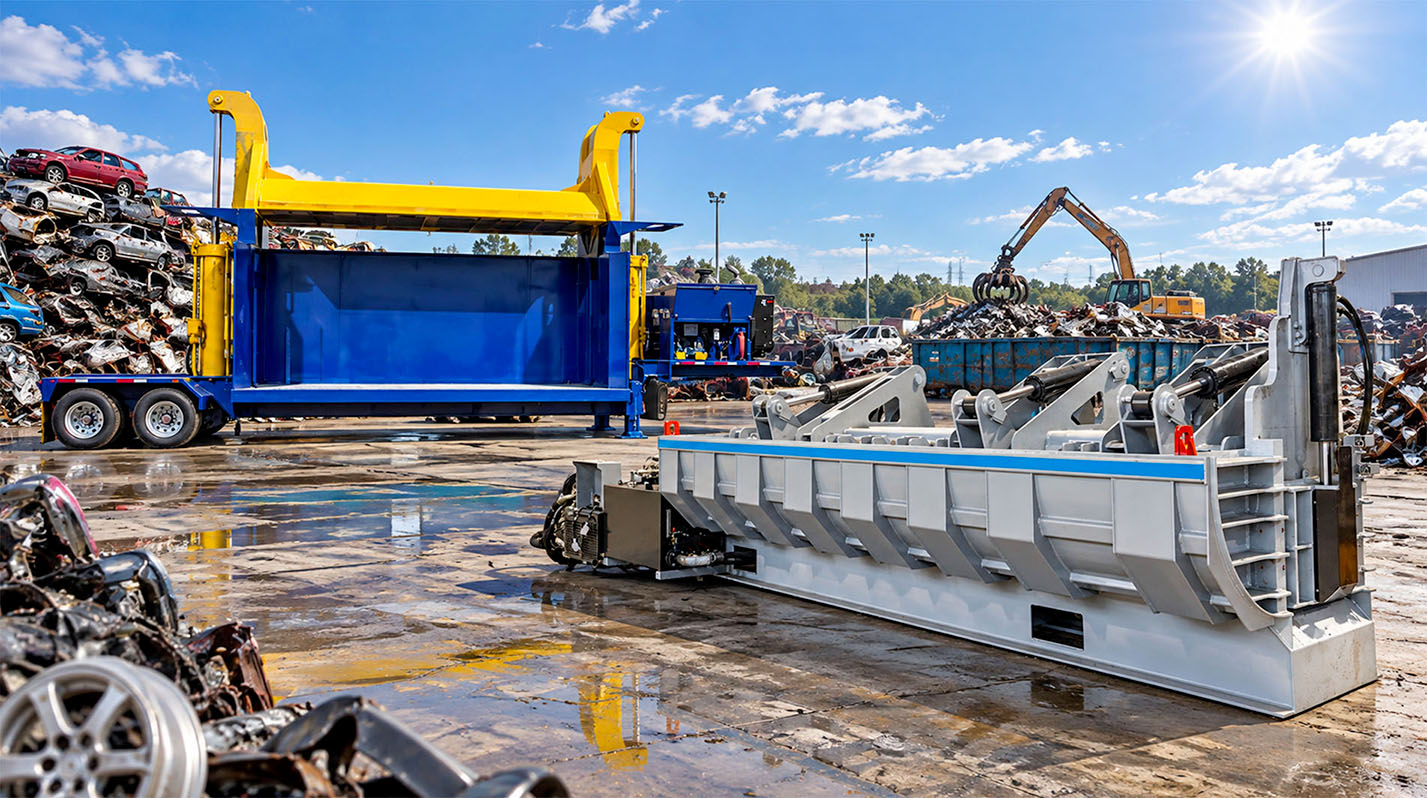
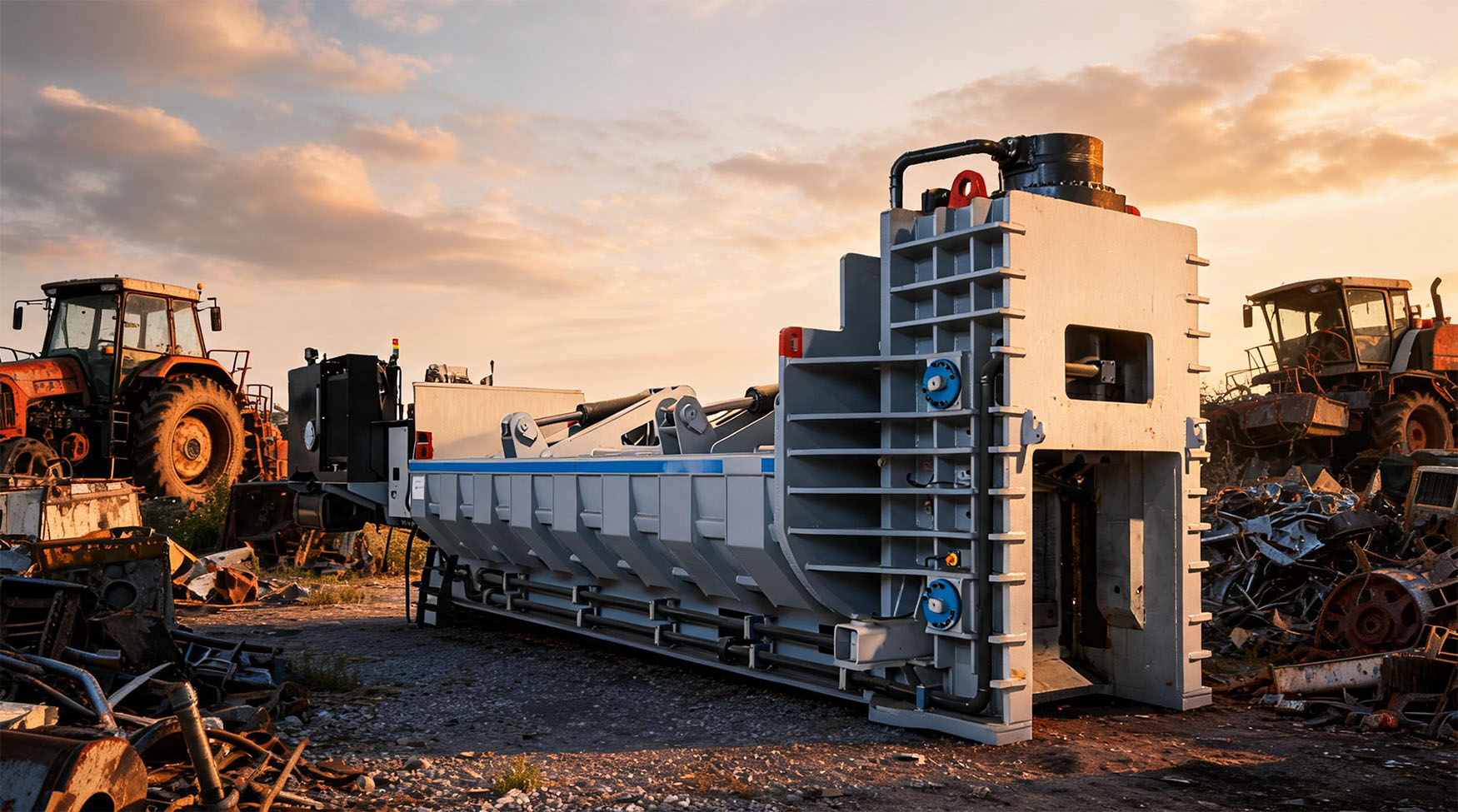
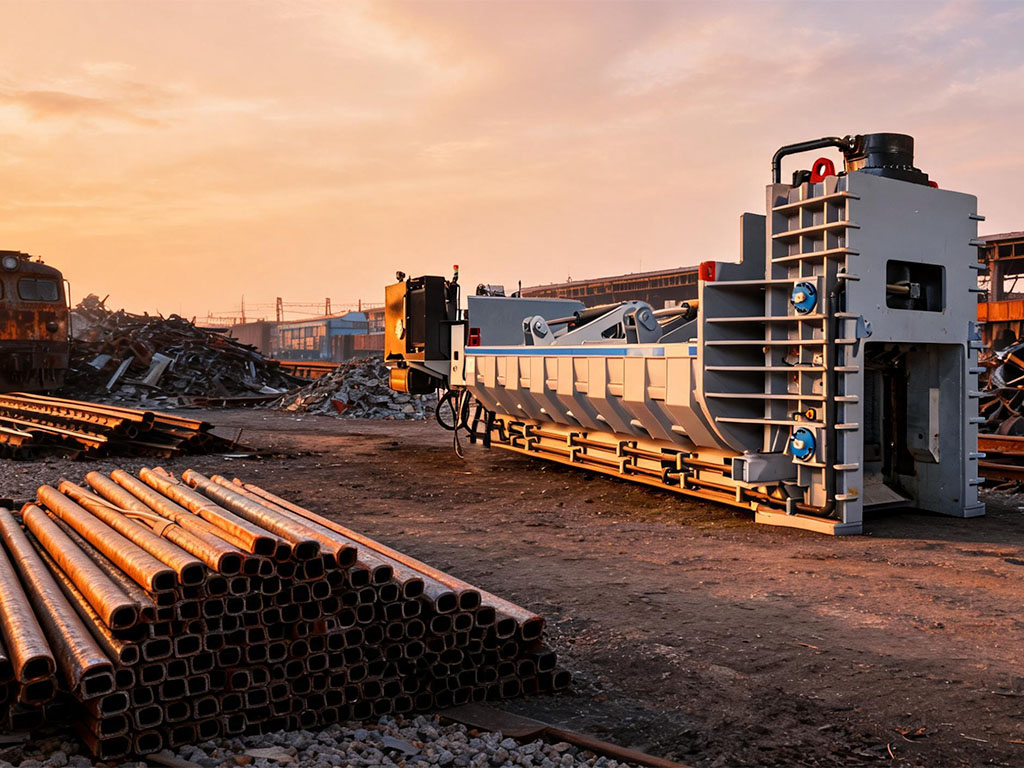
Roter’s shear balers — 550 tonnes of cutting force on the RR550.5 and RR550.6, and 715 tonnes on the RR715.6 — are built for dense, resistant structural steel of exactly this class, cutting oversized hull sections and plate down to transportable lengths in a single pass. For dismantling yards processing a genuine mix of plate thickness and section sizes, our decision matrix by material stream covers how force requirements scale with material density and section geometry, which matters as much in marine dismantling as in any other heavy structural stream.
- Confirm shear force is sized to the thickest, most resistant hull or structural plate the yard actually processes
- Resource hazardous materials removal as a distinct, compliant stage ahead of the baler, not an assumed prerequisite
- Account for corrosion, coating, and contamination when assessing bale quality and downstream mill acceptance
- Plan yard layout around cut-section staging and outbound shipping, since marine dismantling generates concentrated volume during active projects
Why bale density still matters even for pre-cut heavy steel
Even material that has already been cut down from a full hull section benefits from the same freight economics covered in why bale density changes scrap transport economics — irregular, uncompacted heavy sections still occupy more transport volume per tonne than properly baled equivalents, and mills increasingly price scrap partly on how predictably and densely it charges into a furnace. For a dismantling yard operating on tight project timelines, freight efficiency directly affects how quickly a project’s material clears the site.
Cutting a hull section to length solves the size problem. Compacting it properly solves the freight and mill-acceptance problem — and a yard needs both to clear material efficiently.
A practical framework for marine and ship-dismantling scrap
- Confirm shear force against the actual plate thickness and section density the yard processes, not a generic assumption
- Verify hazardous materials removal is complete and compliant before steel reaches the baler
- Assess bale quality specifically for coating, corrosion, and contamination effects, since marine-derived steel rarely arrives clean
- Plan for concentrated project volume and outbound shipping logistics tied to active dismantling schedules
Processing ship or marine dismantling scrap and want a configuration recommendation? Describe your material and project profile to Roter’s technical team — start with the full range here.
FAQs
Why is ship-derived scrap harder to process than typical demolition steel?
Marine steel is thick, heavy-gauge plate built to withstand decades at sea, and frequently arrives coated in marine paint, contaminated with residual oils, or corroded, all of which affect handling and downstream mill acceptance beyond the density and geometry challenges of typical demolition steel.
What must happen before hull sections are processed for compaction?
Hazardous materials removal, including asbestos, residual fuels, and oils, is a specialist regulated upstream process that must be completed to the relevant standard before the steel fraction reaches a baler.
What shear force is needed for marine dismantling scrap?
Force should be sized to the thickest, most resistant hull or structural plate actually processed. Roter shear balers delivering 550 tonnes on the RR550.5/RR550.6 and 715 tonnes on the RR715.6 are built for this class of dense structural steel.
Does bale density matter for material that’s already been cut to size?
Yes. Even pre-cut heavy steel sections benefit from proper compaction, since irregular, uncompacted material still occupies more transport volume per tonne, and mills increasingly price scrap partly on how densely and predictably it charges into a furnace.
How does project-based volume affect equipment planning for ship dismantling?
Marine dismantling generates concentrated volume during active projects rather than steady daily flow, which should shape both yard layout planning around staging and outbound shipping, and potentially deployment configuration if the yard serves multiple dismantling sites.